Leather Cleaning and Conditioning
Gentle cleaning followed by conditioning that protects the factory coating.
Nearly all modern automotive leather is coated. The wear you see is not the hide drying out so much as the protective coating being abraded by body oils, denim dye, and grit. Harsh cleaners accelerate that.
The right approach is mild: lift the soil out of the grain, then leave behind a conditioner that supports the surface without a greasy shine.
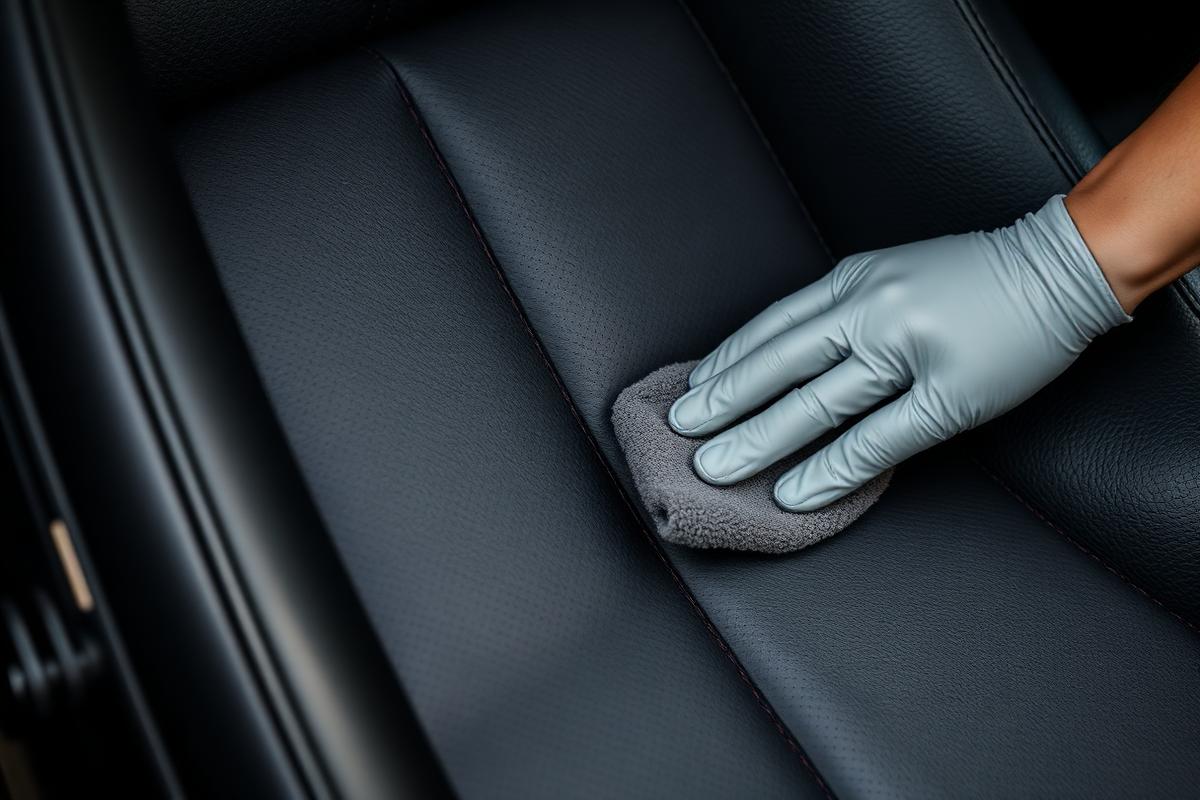
Process
- Vacuum seams and perforations before any liquid is used
- pH-balanced cleaner worked with a soft brush in small sections
- Wipe and dry immediately so nothing sits in the perforations
- Conditioner applied thin and buffed to a matte, factory-looking finish
- Steering wheel, shift area, and door armrests included — they are usually the dirtiest leather in the car
Dye transfer and wear
Blue dye transfer from jeans onto light-colored seats is common and responds partially to cleaning. Cracking or worn-through coating is damage rather than dirt, and cleaning will not restore it — we will say so instead of promising otherwise.
Frequently asked questions
How often should leather be conditioned?
Two to four times a year for a daily driver is reasonable, more if the car parks in direct sun.
Do you use products that leave a shine?
No. Glossy leather dressings attract dust and look artificial. We finish matte.